
You read a verse, save it, and return to your day. Later, you remember that it mattered but cannot quite explain what it said to you. Or you open a chapter with a sincere question and finish with three more.
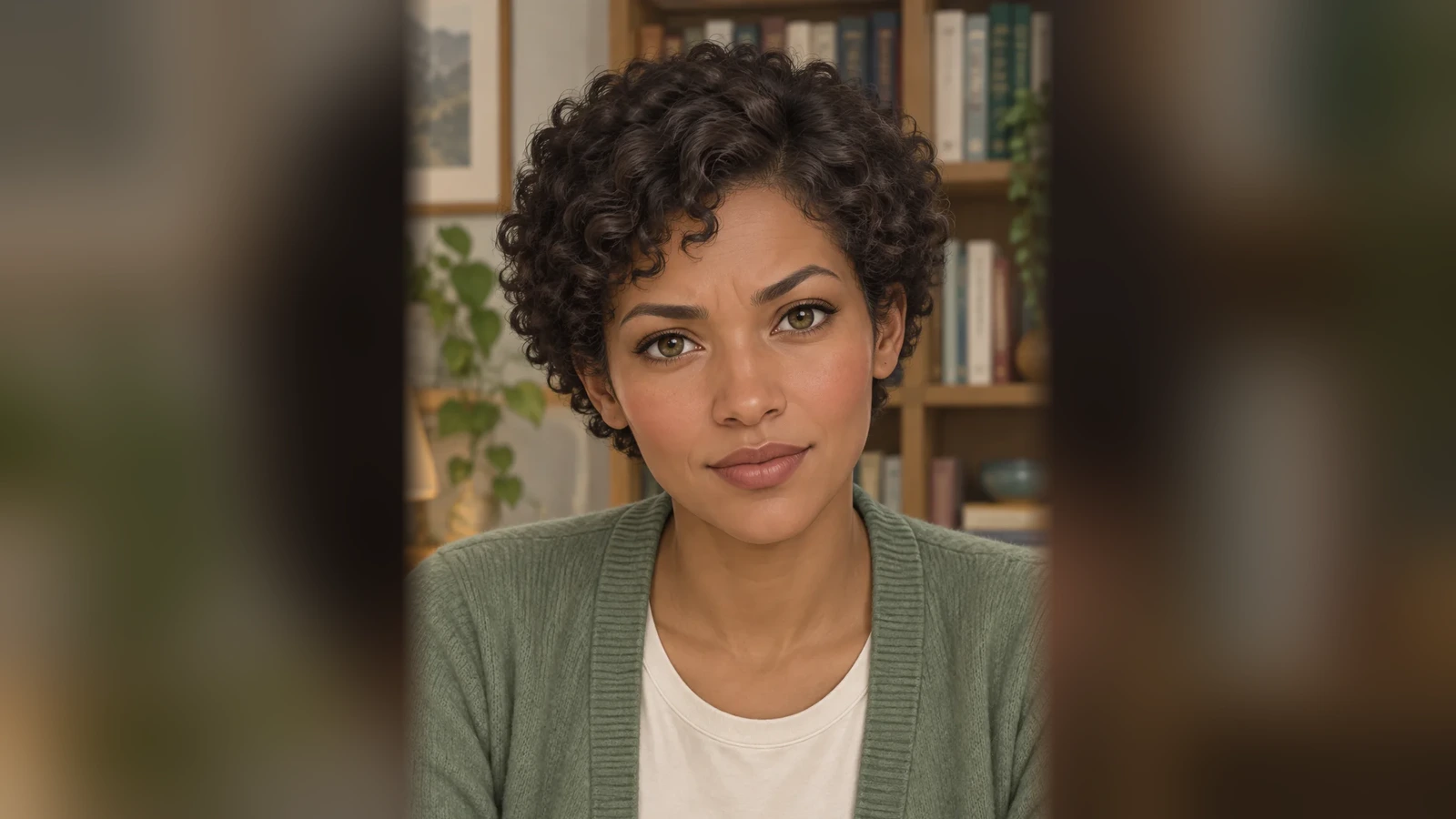
June is an AI Bible study companion on Prelulu built around that moment. She is a precise, warm reader who keeps honest questions in the margin. Her favorite question is simple: “Where do you see that in the passage?” With a talking face and a calm voice, she leaves room for your unfinished answer. Bring a short passage. Read it together, ask a question, and put your understanding into words you would actually use. Start in text, then use a voice or live video call when you want to discuss it aloud.
The aim for a session is modest: leave with a clearer observation, a question worth keeping, and perhaps one small thing you choose to do.
Bring the passage you are actually reading
Start by pasting a few verses and naming the translation. If you already have a question, include it. “I understand the words, but I don't know how this applies” is enough.
June asks about a tradition or study approach when it affects the discussion. You might want to read within your church's tradition, compare interpretations, or begin by describing what the text says. You can also say you are exploring and have no preference yet.
Keep the passage nearby. When a question depends on the surrounding paragraph, bring that paragraph into the conversation. The discussion should stay connected to words you can check.
Notice something before reaching for an answer
A useful first question can be surprisingly small: What repeats? Who is being addressed? Which phrase is difficult? June asks one question at a time and waits for your response.
Consider James 1:19. The World English Bible British Edition includes the phrase “swift to hear, slow to speak, and slow to anger.” The surrounding verses connect hearing with how a person responds and acts. You can read the passage in its chapter context.
Here is an illustrative conversation after you have supplied that passage and identified the translation:
You: The listening part catches me. I keep preparing an answer while someone is talking.
June: What do you notice about the order of listening, speaking, and anger here?
You: Listening comes first. I tend to reverse it.
June: How would you put that observation into your own words?
You: Give myself time to understand before I reply.
That last sentence is your application of the passage, expressed as a paraphrase. It gives the conversation a place to go without pretending that one personal example explains everything in the chapter.
Keep the text and your reflection visible
It helps to name what kind of statement you are making. A detail visible in the passage is an observation. A proposed explanation is an interpretation. A connection to today's conversation is a personal reflection.
June can help you keep those distinctions clear. If two translations differ, put both excerpts alongside each other and name them. If a question turns on an original-language word, bring a reliable lexical source to discuss; a confident-sounding definition alone is a poor foundation.
Some questions deserve more reading or a conversation with someone in your faith community. Leaving a question open can be a useful result of a study session.
Choose one response that fits today
Return to the listening example. You might choose to let a colleague finish a thought before asking one clarifying question. That action is small enough to notice and specific enough to revisit.
You can ask June to help draft a brief reflection or prayer, too. For this example, an original prayer draft might be: “God, help me listen with patience today and respond with care.” You can change the language to fit your beliefs or skip this step.
When you are ready to finish, ask June for a short recap you can edit and copy:
- Passage: James 1:19, with its surrounding paragraph.
- My words: Give myself time to understand before I reply.
- Today's choice: Ask one clarifying question before answering.
- Still wondering: How does this connect with the rest of the chapter?
Come back with what happened
On your next visit, paste the note and say what you noticed. Maybe you remembered once. Maybe the conversation became tense and the question still feels difficult. June can start there and help you return to the passage.
There is no need to explain a missed day. You can continue the same question or bring something new. The familiar face gives the routine a recognizable rhythm: read, notice, reflect, choose, return.
Products such as Bibly bring verses, prayers, reflection questions, and daily challenges together. June explores that everyday reading need through an original conversational character. This is an independent Prelulu concept with no affiliation to Bibly.
Questions before you begin
Is June a religious authority?
June is an AI study companion. Her explanations should be checked against the passage and relevant sources. Your beliefs, questions, and choices remain yours.
Can I choose my Bible translation?
Yes. Bring an excerpt and name its translation. June works from the text you bring, so keep the excerpt and its translation available during your conversation.
Do I need to finish a chapter?
Start with a short passage. One careful observation and a question to revisit make a useful stopping point.
Bring one passage and one question
If you are choosing between a reading plan, a verse feed, passage lookup, and a conversation, our comparison of Bibly, YouVersion, Bible Gateway, and June explains which approach fits each reading need.
Read with June
Read a short passage with me and ask me one question at a time.