
An interactive microdrama puts a decision in your hands at the moment the tension rises. Prelulu Anima takes that idea into a playable story: choose a character, enter an illustrated scene, hear the cast speak, and decide what you do next. Use the story’s suggested choices or write your own action or line of dialogue.
The upgrade is the part you get to play. When the secret comes out, you can ask the question you wanted the protagonist to ask. When someone proposes a deal, you can decide what your character demands. Open Anima Stories to step into an original drama.
From the next episode to your next move
Microdramas build around immediate stakes: a secret relationship, a sudden engagement, a betrayal or a second chance. ReelShort’s official App Store listing, checked on November 12, 2026, describes short vertical episodes and also advertises interactive live-action stories. Interactive drama already takes several forms.
Anima’s form is an illustrated story with a moving, speaking cast and input you can write yourself. The scenes are generated as the story responds to your play. You are choosing what your character says or does, rather than looking for a particular episode in a filmed series.
A filmed microdrama
- What carries the story
- Performed episodes and their sequence of reveals.
- Your next move
- Watch the next episode; some titles also offer interactive choices.
A story with designed branches
- What carries the story
- Scenes connected by choices prepared for the player.
- Your next move
- Choose among the options available at that point.
Anima Stories
- What carries the story
- An original premise, an animated cast and generated story beats.
- Your next move
- Choose an option or write a specific action or reply.
| Experience | What carries the story | Your next move |
|---|---|---|
| A filmed microdrama | Performed episodes and their sequence of reveals. | Watch the next episode; some titles also offer interactive choices. |
| A story with designed branches | Scenes connected by choices prepared for the player. | Choose among the options available at that point. |
| Anima Stories | An original premise, an animated cast and generated story beats. | Choose an option or write a specific action or reply. |
Find your kind of dramatic entrance
A public engagement you did not plan
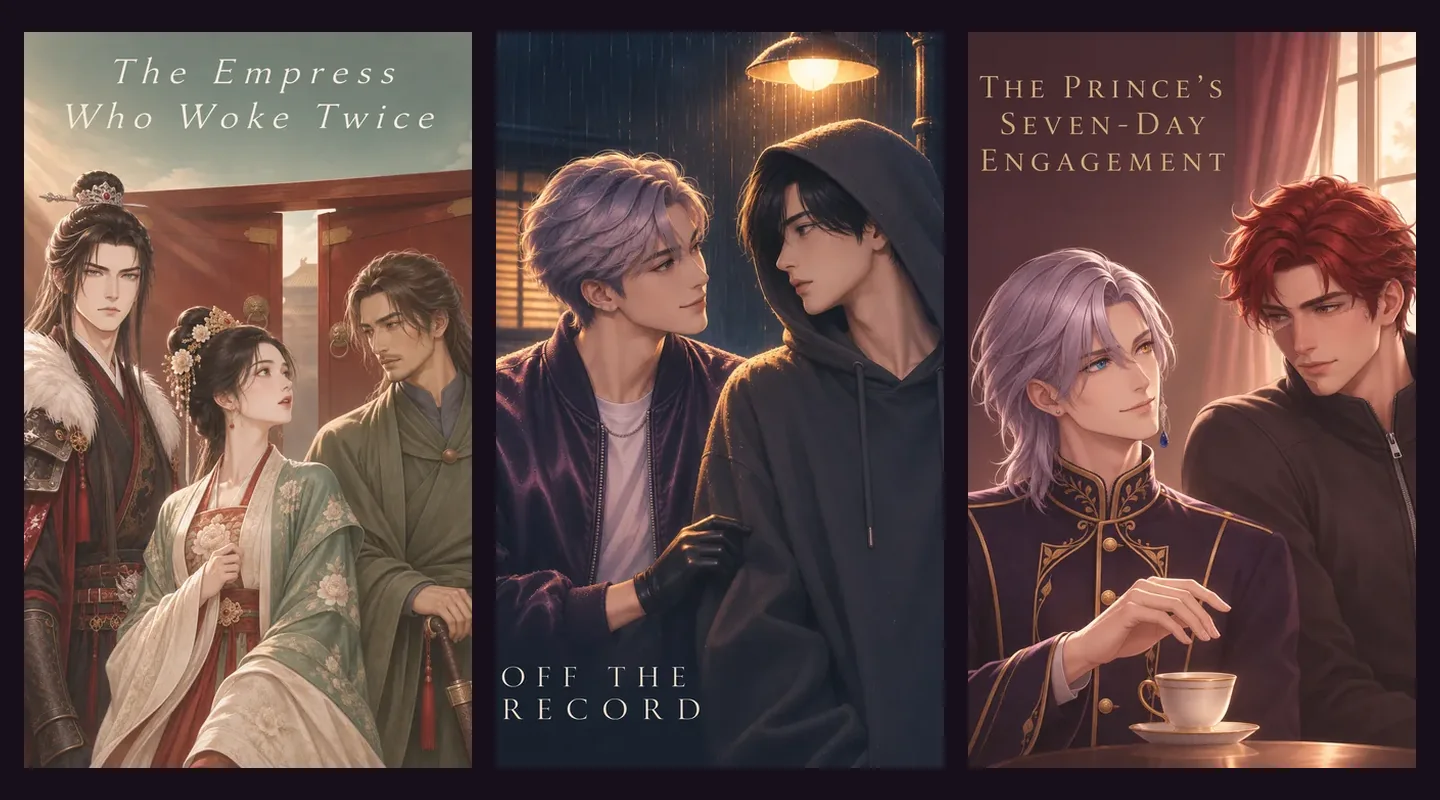
In The Prince’s Seven-Day Engagement, a prince names an unexpected betrothed before the court to escape another marriage. The hook makes a public announcement everybody now has to deal with. It is a good starting situation for negotiating, keeping up appearances or deciding when to ask for the truth.
A secret relationship under pressure
Off the Record starts with a famous idol, a secret relationship and a reporter holding a revealing photo. The premise gives you a deadline and competing interests. Your role lets you explore what should be said openly, who needs an explanation and what you want to protect.
A second life before a betrayal
The Empress Who Woke Twice begins with a poisoned coronation night and a return to five years earlier. A general who once mourned you does not yet know you. Choose it for court intrigue and the question of how to act when you know a possible future that nobody else remembers.
Find these original titles on the Anima shelf. Their introductions establish the situation; the scenes that follow are part of your generated play. They are not episodes from a ReelShort show or a retelling of a particular television series.
Play one confrontation instead of scripting the entire ending
A strong first move is small enough for the cast to answer. Say what your character wants now. If a relationship is about to become public, try: “Before we tell anyone, I need to know whose decision this is.” If someone asks for cooperation, try Act: “I ask for a private conversation before answering in front of the guests.”
These are original input ideas, not dialogue promised by a specific story. They let you test a motive, set a condition or change the tone. Read the response before deciding your next move. The tension comes from the exchange, not from having to dictate an ending in your first message.
What living inside the drama feels like
You pick a role from the cast. The scene gives you a place and other people to respond to; narration and spoken dialogue carry the moment forward. At a decision, the story waits for your input. This is the sense in which you can live inside the microdrama: you participate as a character whose next move is yours.
Anima uses drawn environments and animated characters. It is not a live-action production, an open 3D world or a VR experience. Its appeal is being involved in the scene, with enough structure to start playing and enough freedom to try your own reply.
Keep the drama ready for your next break
Play in your browser at your own reading pace. You can use the saved transcript to revisit what happened and Continue from My stories to return to a recorded play. There is no fixed episode length promised here: a scene takes as long as you spend reading, listening and deciding.
Anima Stories are currently free, with daily play limits. Browsing is open, while playing and creating require sign-in. To make an original premise of your own, use Create a story; the creator prepares the cast and story before it is ready to play.
For Prelulu’s earlier exploration of the idea, see the Prelulu × Hy-Nomas interactive microdrama demonstration. That article covers a separate demonstration and Before Nine. This guide covers the Anima Stories experience available in the browser today.
Take the role at the center of the drama
Choose a premise that makes you want to answer back. Let your next move shape the scene.